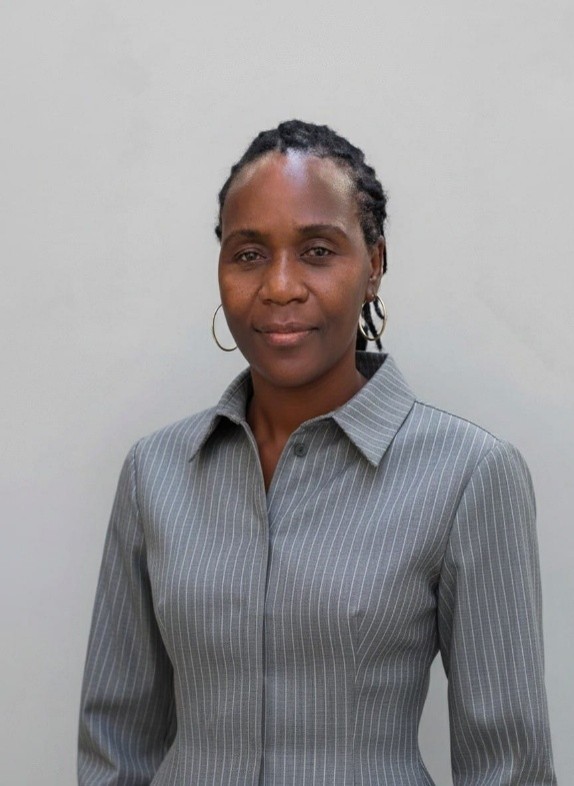
Dr Nomsa-Sadra Wayland
Senior Lecturer, DCPsych
nomsa-sandra.wayland@metanoia.ac.uk
Dr Nomsa-Sandra Wayland is a Chartered Counselling Psychologist and Senior Lecturer on the ProfDoc in Counselling Psychology and Psychotherapy at Metanoia Institute, where she contributes to several modules. She is also a Lecturer and Clinical Tutor on the DClinPsy at UEL. She brings together experience across clinical practice, higher education, research, supervision and professional training, grounded in a relational and Ubuntu-informed understanding of psychology.
Nomsa has clinical experience in NHS mental health services and private practice, and has taught across undergraduate, master’s and doctoral programmes. Her approach to education and supervision is relational and reflective, with particular attention to how culture, identity, power, belonging and lived experience shape therapeutic relationships, learning, supervision and the production of psychological knowledge.
Her research interests include the experiences of minoritised and culturally diverse communities, race-based traumatic stress, racial microaggressions, decolonising therapeutic practice, moral injury, epistemic justice and culturally responsive practice. A central thread in her work is the question of whose knowledge is recognised as legitimate in psychology and psychotherapy, and how culturally situated and historically informed perspectives can contribute to more inclusive and socially just practice, research and professional education.
Methodologically, Nomsa is particularly interested in qualitative and experiential approaches, including IPA, TA and reflexive qualitative methodologies. Her developing scholarship explores relational and Ubuntu-informed approaches to research, reflection, supervision, education and therapeutic practice, drawing on communal understandings of personhood to critically engage with predominantly individualistic Western psychological frameworks and create space for multiple ways of knowing.
More broadly, Nomsa’s work is underpinned by a commitment to developing psychologically informed spaces in which multiple ways of knowing can coexist and contribute to knowledge creation. She is particularly interested in supporting practitioners and researchers to engage critically and reflexively with questions of culture, difference, power and positionality, while developing therapeutic and research practices that are ethically responsible, culturally attuned and responsive to the communities they serve.