Doctorate in Counselling Psychology and Psychotherapy (DCPsych)

Applications Closed

Key Information

Field of Study

Duration

Start Dates

Teaching Institution

Awarding Institution

Accrediting Professional Body

Location

The Doctorate in Counselling Psychology and Psychotherapy by Professional Studies (DCPsych) is a rigorous programme that combines professional training in counselling psychology with an advanced understanding and practice of psychotherapy. On qualifying, students are awarded a dual qualification as both UKCP registered psychotherapists and BPS/ HCPC registered counselling psychologists.

Rooted in humanistic, psychodynamic, and integrative approaches, the programme uniquely prepares students to work therapeutically across diverse client groups and settings, including the NHS, industry, third sector, private practice, academic and research roles, and many others.

This programme fosters critical self-reflection, clinical expertise, and the development of a unique therapeutic style. It places emphasis on understanding human behaviour within therapeutic relationships and broader social contexts and incorporates both verbal and non-verbal therapeutic modalities. Candidates engage with complex psychological phenomena, including trauma, attachment, and relational dynamics, supporting their growth as autonomous, reflective practitioners.

Course Philosophy

Our training is rooted in relational models of Counselling Psychology practice. The programme incorporates relational psychodynamic models, humanistic and systemic perspectives, and 2nd and 3rd wave Cognitive Behavioural Therapy. You will also be introduced to expressive and creative therapies. In this way, the training equips you with the knowledge to develop your own personal integrative model based on these approaches. In addition, the programme is underpinned by practitioner-researcher philosophy and comprises an innovative design which seeks to integrate research and practice at doctoral level. Research training is included in and throughout the programme.

Course Modules

Modules

  • Year 1: Understanding Psychological Distress: Knowledge Integration & Application; Professional and Ethical Foundations of Practice; Humanistic Approaches in Counselling Psychology; CBT, Brief and Solution‑Focused
    Models; Research 1 – Approaches to Knowledge & Evidence; Professional Practice & Placement 1; Personal and Professional Development
  • Year 2: Advanced Practice 1; Power and Difference in Therapeutic Practice; Psychodynamic Approaches in Counselling Psychology; Research 2 – Practitioner Research Proposal; Professional Practice & Placement 2
  • Year 3: Advanced Professional Development & Challenges in Contemporary Integrative Practice; Advanced Practice 2; Research 3 – Methodology & PAP; Practitioner Research Project 1 – Progress Review; Professional Practice & Placement 3;
  • Year 4: Integrative Practice: Clinical Dissertation & Client Skills Assessment; Professional Practice & Placement 4; Research 4 – Analysis & Write‑Up; Practitioner Research Project: Progress Review
  • (Year 5: Optional Writing up Year)

Supporting Information

Teaching Methods

Teaching occurs through monthly intensive training weekends, where theoretical learning is enriched through small-group discussions and experiential exercises. Skills are practised through role-play and supervised clinical practice, with reflective group sessions encouraging self-awareness. Regular Group Process sessions are held to deepen personal insight and relational understanding.

Teaching Locations and Delivery Format

Years 1 & 2

  • Fridays: Online Teaching
  • Saturdays & Sundays: In person at Middlesex University, Hendon Campus

Years 3

  • Fridays: In person at Metanoia Institute, North Common Road Campus
  • Saturdays: In person at Middlesex University, Hendon Campus

Year 4

  • Fridays: In person at Metanoia Institute, North Common Road Campus


Please note that teaching locations may be subject to change depending on cohort size and room availability.


Clinical Placements, Personal Therapy, and Supervision

Clinical placements are arranged through the Metanoia Institute’s Placement Coordinator, including opportunities at Metanoia’s in-house counselling and psychotherapy services and NHS-affiliated sites. Clinical placements include at least 450 hours of supervised practice. Students must complete 160 hours of personal therapy throughout the programme, along with a minimum of 80 hours of clinical supervision. Mental Health Familiarisation, consisting of 140 hours, provides additional exposure to diverse clinical settings.


Validated by Middlesex University and Accredited by BPS, HCPC and UKCP

The programme is validated and quality assured by Middlesex University. This course is also accredited by the British Psychological Society (BPS), Health and Care Professions Council (HCPC) and United Kingdom Council for Psychotherapy (UKCP).


Alumni Path

Graduates may register as Counselling Psychologists with the HCPC and BPS, and as Psychotherapists with the UKCP, working across NHS, higher education, and private practice.

Key Contacts

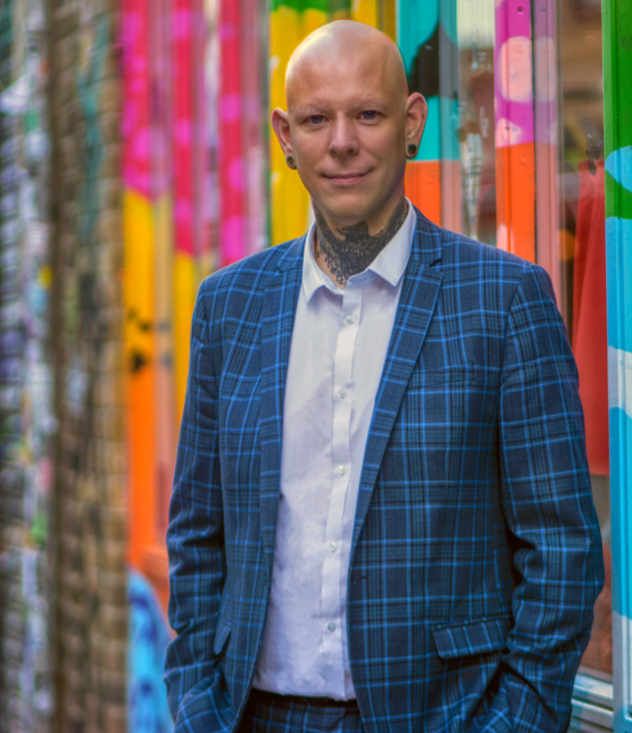
Craig Abex

Head of Programme, DCPsych

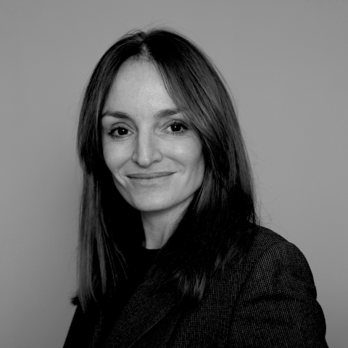
Craig is a HCPC Registered and BPS Chartered Counselling Psychologist, UKCP Registered Integrative Psychotherapist, EMDR Therapist, and Clinical Supervisor. His Doctorate research explored the experience of Moral Injury among psychological therapists working in NHS Talking Therapies. Craig has a wide range of clinical experience working across primary care, secondary care, and charity sectors. One of his proudest accomplishments was leading the development of a low-cost counselling service to support those with low incomes to access longer-term therapy. As part of this he supervised and managed a team of therapists over the course of three years before moving to his current role as a Counselling Psychologist and Psychotherapist in an Acute NHS Psychiatric Hospital. Craig also has an independent practice where he provides psychotherapy, supervision, and expert witness reports. Clinically, Craig is passionate about working with complex trauma. Although he is integrative, he has a keen interest in EMDR, psychodynamic psychotherapy, and the art and science of formulation. He has gained much experience with managing risk and working with complex and enduring mental health difficulties such as psychosis, PTSD, bipolar, dissociative disorders, and personality disorders. With this, he maintains a great interest in research, and in particular the philosophical assumptions underpinning clinical practice and the social sciences. He would describe himself as a Critical Realist but maintains a great curiosity for other ways of conceptualising the nature of reality and how we come to know it.

Course Dates

Please note: the next available starting point for new students will be September 2027

For full teaching dates for this programme, please see our Postgraduate (Research) Course Dates page

Please note that teaching dates may be subject to change

Entry Requirements

Academic eligibility requirements

  • A 2:1 (or higher) degree in psychology with Graduate Basis for Chartership (GBC) from the British Psychological Society (BPS)  
  • If a candidate has a 2:2 in psychology undergrad, then they must have a master’s degree in psychology at a pass level or above.  
  • If a candidate has a non-psychology undergraduate degree, regardless of grade, they must have a 2:1 or merit or above in a psychology conversion.  
  • Academic grades outside of this will not be accepted.  

Mental health experience

Applicants must have a minimum of either 6 months full time or 1 year part time in mental health, counselling, clinical or therapeutic work that includes some in-person face to face therapeutic contact. Online experience is also accepted, provided there is some in-person experience also.   

Experience can be paid or voluntary. Please note an applicant’s experience must go beyond befriending or mentoring. Experience outside of mental health will not be considered.  

Counselling skills training

Successful completion of a qualification in counselling skills training (min 35 hours) such as a certificate or diploma level.  

Counselling skills training must include practical skills experience such as role plays and must include at least one therapeutic model taught on the DCPsych (e.g. CBT, humanistic, psychodynamic). It also must be a live, taught course.  

Examples of accepted courses: 

  • Metanoia Certificate in Therapeutic Skills  
  • PWP 1 year training  
  • Level 3 or above counselling skills  

Not accepted: 

  • Level 2 counselling skills  
  • Course based on a model not taught at Metanoia e.g. hypnotherapy, DBT, EMDR 
  • Self –paced / self-taught courses
     

English language skills

For students whose first language is not English, an IELTS score of 7.0 (with a minimum of 6.5 in each component) is required unless you have a prior higher education qualification taught in English.  

Right to live, work and study in the UK 

Applicants must have the right to live, work and study in the UK at the time of application. Clinical Placements must be undertaken within the UK and supervisors must be registered with a UK-based professional body.  

References

2x references from an academic institution, relevant employment or voluntary role.  

Please note: The DCPsych programme attracts a large number of applications each year, making the selection process highly competitive. As a result, only the most suitable candidates will be offered a place. Decisions are made by both the admissions and programme team based on the evidence provided throughout the application process 

Please note: The DCPsych programme attracts a large number of applications each year, making the selection process highly competitive. As a result, only the most suitable candidates will be offered a place. Decisions are made by both the admissions and programme team based on the evidence provided throughout the application process

Click here for more information about additional course requirements

Fees and Funding

2026/2027 Fees:

  • Year 1: £9,350
  • Year 2: £9,350
  • Year 3: £9,350
  • Year 4: £9,350
  • Continued writing up of research (Per semester): £2,350.
  • An additional fee of £975 would apply in the unlikely event of a resubmission being necessary for your doctoral research project and viva.

2027/2028 Fees:

  • Year 1: £9,625
  • Year 2: £9,625
  • Year 3: £9,625
  • Year 4: £9,625
  • Continued writing up of research (per semester): £2,400.
  • An additional fee of £1,000 would apply in the unlikely event of a resubmission being necessary for your doctoral research project and viva.

The 2027/28 fees apply to courses starting from September 2027.


Please note: Student Loan Information

Doctoral funding is managed by our validating partner, Middlesex University. This means that prospective students applying for the loan must search for the course with Middlesex University as the provider’s name.

The Student Loan Company (SLC) course code for your funding will vary depending on the intake you will be joining (September vs January), the mode of study you have chosen to follow (full-time vs part-time) and the number of years you intend to study.

Funding is confirmed when students have registered fully with Middlesex University, normally following their registration with Metanoia Institute.

Mode of Study

SLC code

Course Description

Years of study

Campus

Intake

part-time

215802

DCPsych Counselling Psychology and Psychotherapy by Professional Studies (MET)

4

Hendon Campus

September intake

part-time

215803

DCPsych Counselling Psychology and Psychotherapy by Professional Studies (MET)

4

Hendon Campus

September intake


part-time

896728

DCPsych Counselling Psychology and Psychotherapy by Professional Studies (MET)

5

Hendon Campus

January intake

part-time

896727

DCPsych Counselling Psychology and Psychotherapy by Professional Studies (MET)

5

Hendon Campus

September intake


full-time

855753

Doctor of Psychotherapy by Professional Studies (MET) (DPsych)

4

Hendon Campus

September intake

full-time

855754

Doctor of Psychotherapy by Professional Studies (MET) (DPsych)

4

Hendon Campus

September intake


full-time

203108

Doctor of Psychotherapy by Professional Studies (MET)(DPsych)

3

Hendon Campus

January intake

full-time

203107

Doctor of Psychotherapy by Professional Studies (MET)(DPsych)

3

Hendon Campus

September intake


part-time

71683

DPsych Professional Studies [MET](DE)

5

Hendon Campus

January intake

part-time

71682

DPsych Professional Studies [MET](DE)

5

Hendon Campus

September intake

How to Apply

At Metanoia, we are committed to empowering the next generation of professionals in counselling and psychotherapy. This programme offers a unique opportunity to develop your skills and achieve your career aspirations in a supportive learning environment.

Click the button below to begin your application:

Applications Closed

Accrediting Professional Bodies